Installation specifications for anchor bolts and stability assurance measures for anchor fasteners
As a crucial connecting component between equipment and infrastructure, its installation quality directly impacts equipment operation safety, structural stability, and the service life of the project. In fields such as building construction, mechanical equipment installation, and steel structure engineering, strictly adhering to installation specifications and adopting scientific fixing and protective measures are important prerequisites for ensuring the long-term stability of anchor fasteners.
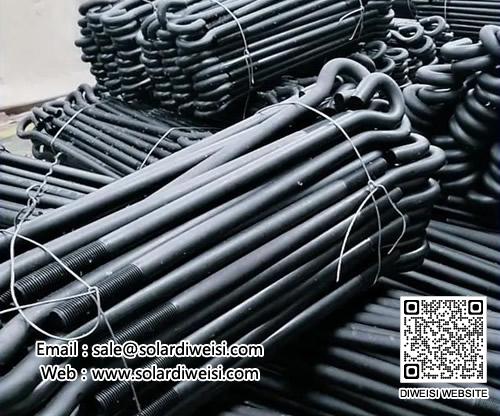
I. General installation specifications for anchor bolts
During the construction and installation process, anchor bolts must be installed in accordance with design requirements and relevant engineering standards to ensure that their position, elevation, perpendicularity, and anchoring effect meet the specifications.
Preliminary positioning and pre-embedded control
Before construction, accurate setting-out should be carried out according to the construction drawings to clarify the bolt positions, axis deviations, and spacing dimensions. During the pre-embedding stage, reliable fixing supports should be used to prevent displacement, deflection, or uplift during the concrete pouring process, ensuring that the bolt position errors are controlled within the allowable range.
Elevation and verticality control
The elevation of the bolt top must be strictly controlled according to the design values to avoid affecting subsequent equipment installation due to being too high or too low. At the same time, tools such as guiding rules and plumb bobs should be used for correction to ensure that the vertical deviation of the bolt meets the engineering requirements and prevent uneven stress caused by tilt.
Specification for concrete pouring and curing
When pouring concrete, direct impact on bolts and fixing frames should be avoided. A layered vibration method should be adopted to ensure that the concrete around the bolts is dense, reducing honeycombing, voids, and loosening. After pouring, curing should be carried out according to specifications to ensure a steady increase in foundation strength and provide reliable anchoring force for the bolts.
Fastening and torque control
After the equipment is in place, the nuts should be tightened evenly in the order specified by the design requirements to avoid uneven stress caused by applying force on one side or tightening in one go. For important equipment anchor bolts, it is advisable to use a torque wrench to tighten them in stages according to the specified torque values, ensuring that the pre-tightening force is reasonable and reliable.
Preservation and protective treatment
The exposed screw part should be protected against corrosion according to the usage environment, such as by applying anti-rust paint, galvanizing for protection, or installing protective covers, to reduce rusting, loosening, and external damage, thereby extending its service life.
II. How to ensure the stability of foundation fasteners
Anchor bolts may be affected by vibration, load changes, environmental erosion, etc. during long-term use, necessitating improvements in stability from multiple aspects such as construction, materials, structure, and operation and maintenance.
Select qualified anchor bolt materials
Based on equipment load, foundation environment, and service life, select bolt materials that meet the standards, ensuring that the material, strength, and specifications are consistent with the design, to avoid pullout failure or fracture due to insufficient material performance.
Enhance the anchoring depth and bond strength
Reasonably set the anchoring length to ensure that the embedded part of the bolt is tightly integrated with the concrete, and enhance the pullout and shear resistance by expanding the contact area. If necessary, structural forms such as hooks and anchor plates can be used to enhance the anchoring effect.
Adopt reliable fixation and anti-loosening measures
To mitigate the vibration caused by equipment operation, accessories such as flat washers, spring washers, lock nuts, and threadlockers can be used to reduce the risk of nut loosening. For equipment with significant vibration, double nut locking or a dedicated anti-loose structure can be employed.
Enhance the compactness of secondary grouting
For the secondary grouting between the equipment base and the foundation, non-shrinkage, high-strength grouting materials should be used to ensure dense filling without voids, allowing the load to be evenly transmitted to the foundation and enhancing overall rigidity and stability.
Regular inspection and maintenance
After the project is handed over, regular inspections should be conducted to check the tightening status of bolts, rusting conditions, and whether there are issues such as cracking and subsidence in the foundation. Any looseness should be promptly retightened, and any rusting should be promptly addressed to prevent the expansion of hidden dangers.
III. Summary
The installation quality of anchor bolts is the foundation for the safe operation of equipment and structures. Only by strictly adhering to the entire process specifications, including positioning, embedding, pouring, fastening, and corrosion prevention, can the installation accuracy be ensured from the source. Meanwhile, through measures such as reasonable material selection, strengthened anchoring, anti-loosening treatment, and regular maintenance, the long-term stability of anchor fasteners can be significantly improved, providing reliable guarantees for the safe operation of engineering structures and equipment.